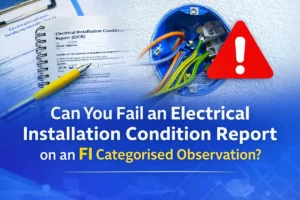
If you’ve ever been told you need an EICR, you might have nodded politely — then quietly wondered what that actually means.
You’re not alone. Most property owners and landlords in Basingstoke and nearby towns like Fleet or Alton hear about electrical inspections but aren’t sure what’s really involved.
An EICR, or Electrical Installation Condition Report, is essentially a full health check for your electrical system. It’s not just a quick look at the fuse box — it’s a detailed test that assesses how safe and compliant your wiring, circuits, and connections really are.
So, what’s covered in an EICR? Let’s walk through it in plain English.
The purpose of an EICR
An EICR is designed to assess the safety and condition of your fixed electrical installation — that means everything from your consumer unit (fuse board) to the wiring hidden behind your walls.
It helps identify:
- Defects that could cause electric shock or fire
- Damage, wear, or deterioration from age or use
- Poor-quality work or unsafe DIY alterations
- Circuits that don’t meet the latest wiring regulations
The goal is simple: to make sure the installation is safe for continued use and meets the current BS 7671 Wiring Regulations.
What’s actually checked during an EICR?
A proper EICR involves both visual inspection and electrical testing carried out by a qualified electrician.
Here’s what’s included:
- Consumer unit (fuse board): Checking for proper RCD protection, circuit labelling, and secure terminations.
- Cables and wiring: Inspecting for damage, wear, or signs of overheating.
- Sockets, switches, and fittings: Testing polarity, earthing, and tightness of connections.
- Earthing and bonding: Verifying that all metalwork — like pipework, gas, and water — is properly earthed.
- Protective devices: Ensuring breakers and fuses operate correctly and provide the right level of protection.
- Circuit testing: Measuring insulation resistance, continuity, and fault loop impedance.
- Condition of accessories: Checking lights, spurs, and isolators for cracks, damage, or signs of heat.
- Overall safety and compliance: Assessing whether the system still meets current standards.
Everything is recorded, tested, and graded according to what’s found.
How faults are reported
When the inspection’s done, the electrician issues a report with one of two outcomes:
- Satisfactory – the installation is safe for continued use.
- Unsatisfactory – one or more issues need to be fixed.
Any faults are coded to show their level of risk:
- C1: Danger present – immediate risk of shock or fire.
- C2: Potentially dangerous – needs urgent attention.
- FI: Further investigation required – possible issue needs checking.
- C3: Improvement recommended – not unsafe, but not up to modern standards.
If your report comes back unsatisfactory, your electrician will explain what needs to be done to put it right — and once it’s fixed, you’ll receive written confirmation or a follow-up certificate.
How long it takes
For a typical three-bedroom house in Old Basing or Four Marks, an EICR takes around three to four hours, depending on the size, age, and condition of the installation.
Larger commercial buildings in places like Burghclere or Alton can take longer, especially if there are multiple distribution boards or three-phase systems.
Why it’s important
An EICR isn’t just paperwork. It’s an essential part of keeping your property safe and compliant.
Regular inspections help you:
- Prevent electrical fires and accidents
- Identify wear and faults early
- Comply with landlord and insurance requirements
- Protect the value of your property
- Provide peace of mind that everything’s working as it should
For landlords and businesses, it’s also a legal obligation under the Electrical Safety Standards in the Private Rented Sector (England) Regulations 2020.
How often should you have one?
- Homeowners: Every 10 years
- Landlords: Every 5 years or at each change of tenancy
- Commercial properties: Every 5 years (or more often for high-risk environments)
If your electrics are older, have been altered, or you’re unsure when they were last tested, it’s worth arranging an inspection sooner.
How GU Solutions helps
At GU Solutions, we’ve been inspecting and testing electrical installations across Basingstoke, Dummer, Fleet, Alton, and the surrounding Hampshire villages for over 20 years.
We’re NICEIC Approved Contractors, fully insured, and trusted by homeowners, landlords, and businesses alike.
We carry out EICRs for:
- Homes and rental properties
- Offices and retail units
- Factories and workshops
- Schools, halls, and public buildings
You’ll get a clear, detailed report explained in plain English — not a pile of jargon you can’t make sense of. And if any issues are found, we can put them right quickly and efficiently.
Book your EICR today
If you’re unsure when your property was last tested — or you’ve never had an EICR before — it’s time to get one done.
Call GU Solutions on 01256 473326 or send us a message to book your Electrical Installation Condition Report.
We’ll inspect your property thoroughly, explain the results clearly, and give you confidence that your electrics are safe, compliant, and ready for everyday use.
Because when it comes to electrical safety, it’s what you can’t see that matters most.