You’ve just had electrical work done — maybe a new consumer unit, extra sockets, or a lighting upgrade. Everything looks neat, it all works perfectly, and the electrician has packed up.
But before you tick the job off your list, there’s one final, important thing to check: have you received the right electrical certificates?
These aren’t just bits of paperwork. They’re your proof that the work was done safely, tested properly, and complies with UK regulations. Without them, you could face problems later — especially if you’re selling or renting a property, making an insurance claim, or managing a commercial premises.
Here’s a simple guide to what certificates you should expect and why they matter.
Electrical Installation Certificate (EIC)
You should receive an Electrical Installation Certificate whenever a new installation or major alteration is completed.
That includes work such as:
- Installing a new consumer unit (fuse board)
- Adding new circuits
- Full or partial rewires
- Major distribution board changes in commercial settings
The EIC confirms that:
- The work meets BS 7671 Wiring Regulations
- It’s been tested and verified as safe
- The installation is suitable for continued use
It should be issued by the electrician who carried out the work, and it must include their competent person scheme registration number (for example, NICEIC or NAPIT).
For commercial installations, you’ll also receive detailed test results for each circuit — important for future maintenance and inspections.
Minor Electrical Installation Works Certificate (MWC)
If the work was small — such as adding a socket, replacing a light fitting, or extending an existing circuit — you should get a Minor Works Certificate.
This confirms that the work doesn’t adversely affect the safety of the existing installation.
While it’s less detailed than a full EIC, it’s still essential documentation, especially for landlords, facilities managers, and anyone who wants to maintain accurate service records.
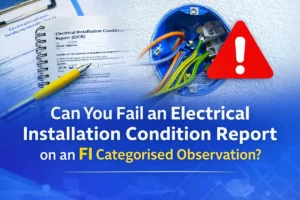
Electrical Installation Condition Report (EICR)
An EICR isn’t issued for new work — it’s a report that assesses the condition of an existing installation. However, if electrical work has been carried out as part of a wider inspection or remedial process, you may receive both an EIC or MWC and a follow-up EICR.
This confirms that the remedial work has been completed and that the installation now complies with regulations.
For landlords and commercial properties, an up-to-date EICR is often a legal requirement.
Building Regulations Compliance Certificate
In England and Wales, most domestic electrical work that involves a new circuit, consumer unit, or work in a “special location” (such as a bathroom) must also comply with Part P of the Building Regulations.
If your electrician is registered with a competent person scheme like NICEIC or NAPIT, they’ll notify building control on your behalf and you’ll receive a Building Regulations Compliance Certificate in the post.
This comes from their scheme provider, not directly from the electrician, and usually arrives within a few weeks of the work being completed.
You’ll need this document if you ever sell your home — solicitors almost always ask for it.
Why certificates matter
Electrical certificates aren’t red tape. They protect you.
They provide:
- Proof of safety and compliance for your insurance and legal obligations
- Evidence of professional workmanship for future buyers or tenants
- A reference point for maintenance and testing schedules
- Peace of mind that your installation has been tested properly
Without them, you’re left with no formal proof that the work meets UK safety standards — and that can cause big problems down the line.
What to check before your electrician leaves
Before signing off the job, make sure:
- The certificate includes your name, address, and details of the work
- It’s signed and dated by the electrician
- Their registration body (NICEIC, NAPIT, or equivalent) is clearly listed
- You receive all test results or schedules, where applicable
If you don’t receive a certificate within a reasonable time, contact the contractor or their scheme provider to follow it up.
How GU Solutions can help
At GU Solutions, every job we carry out in Basingstoke, Hook, Tadley, and across Hampshire is fully certified and compliant with UK regulations.
As NICEIC Approved Contractors, we issue the correct certificates for every project — whether it’s a small domestic upgrade or a large commercial installation.
You’ll always know your work has been tested, documented, and approved to the highest standards.
We’ll even keep digital copies of your certificates for future reference, making it easy if you ever need replacements.
Book your electrical inspection or upgrade
Whether you’re planning an installation, need certification for a past project, or want to bring an older system up to standard, we can help.
Call GU Solutions on 01256 473326 or message us online to book your electrical inspection, installation, or certification check.
We’ll make sure your electrics — and your paperwork — are in perfect order.
Because in business and at home, safety and compliance aren’t optional extras.